 By Habiba Kareem
Picture a single room holding 5,000 golden objects that have never all been displayed together before, not even when they were found. That room exists now, on the edge of the Giza plateau, inside the Grand Egyptian Museum. After two decades of construction, the largest archaeology museum in the world finally opened to the public, and it has quietly become the most talked-about new attraction in the Middle East.
If you are planning a trip to Egypt, the Grand Egyptian Museum is no longer optional background reading, it is the headline. For decades, the Tutankhamun treasures were split across different halls of the old Tahrir museum, several badly lit and poorly labeled for a discovery of that magnitude. That has now changed completely, and the shift has reshaped how tour operators like us build Cairo itineraries from scratch.
This guide, built by the local team at Egypto Tours, answers what people actually ask us: how much does it cost, when should you go, how long do you need, and is it really worth rearranging your itinerary for. Short answer: yes. Long answer, below.
What Is the Grand Egyptian Museum?
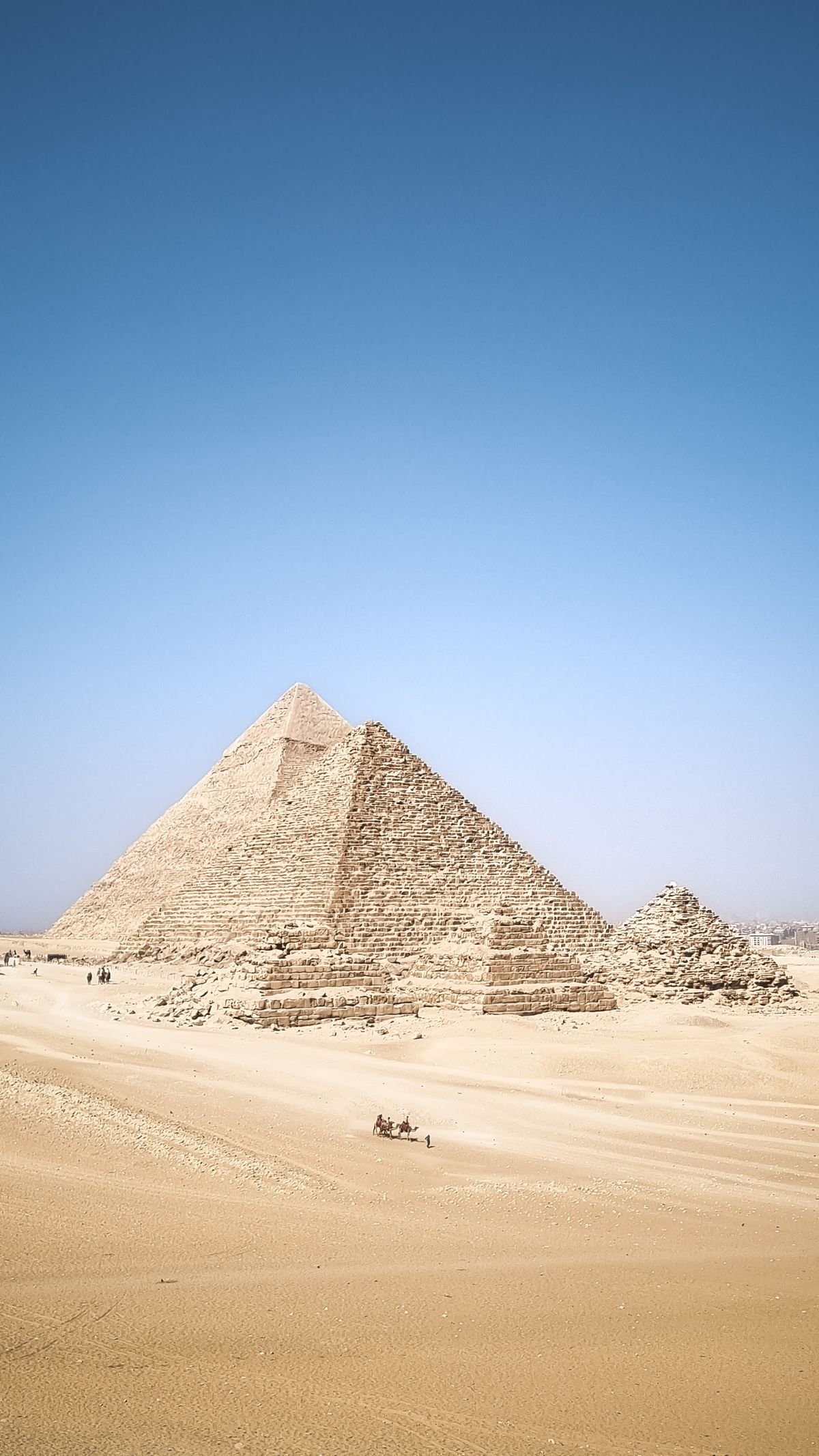
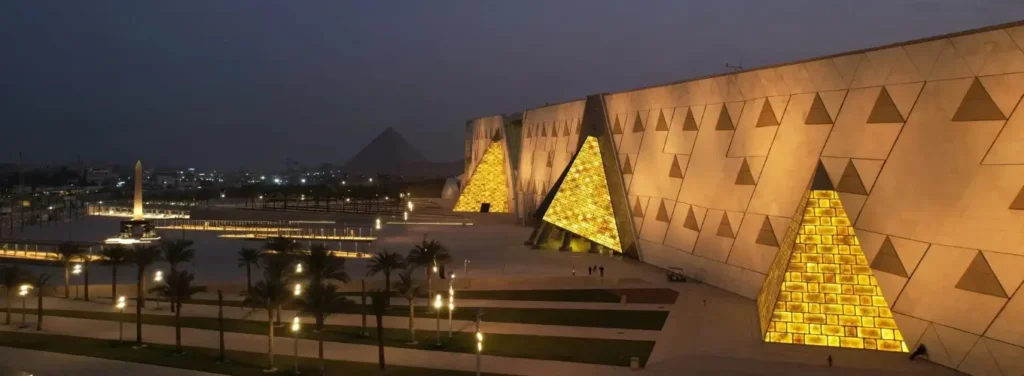
The Grand Egyptian Museum, often shortened to GEM, is a vast new museum complex on the Giza plateau, within sight of the Pyramids. It was built to replace the aging Egyptian Museum in Tahrir Square as the country’s flagship institution, and at roughly 500,000 square meters it is the largest museum dedicated to a single civilization anywhere in the world.
It displays more than 100,000 artifacts across dozens of galleries, organized not by object type but by chronology and theme, so visitors move through Egyptian history in something close to the order it happened.
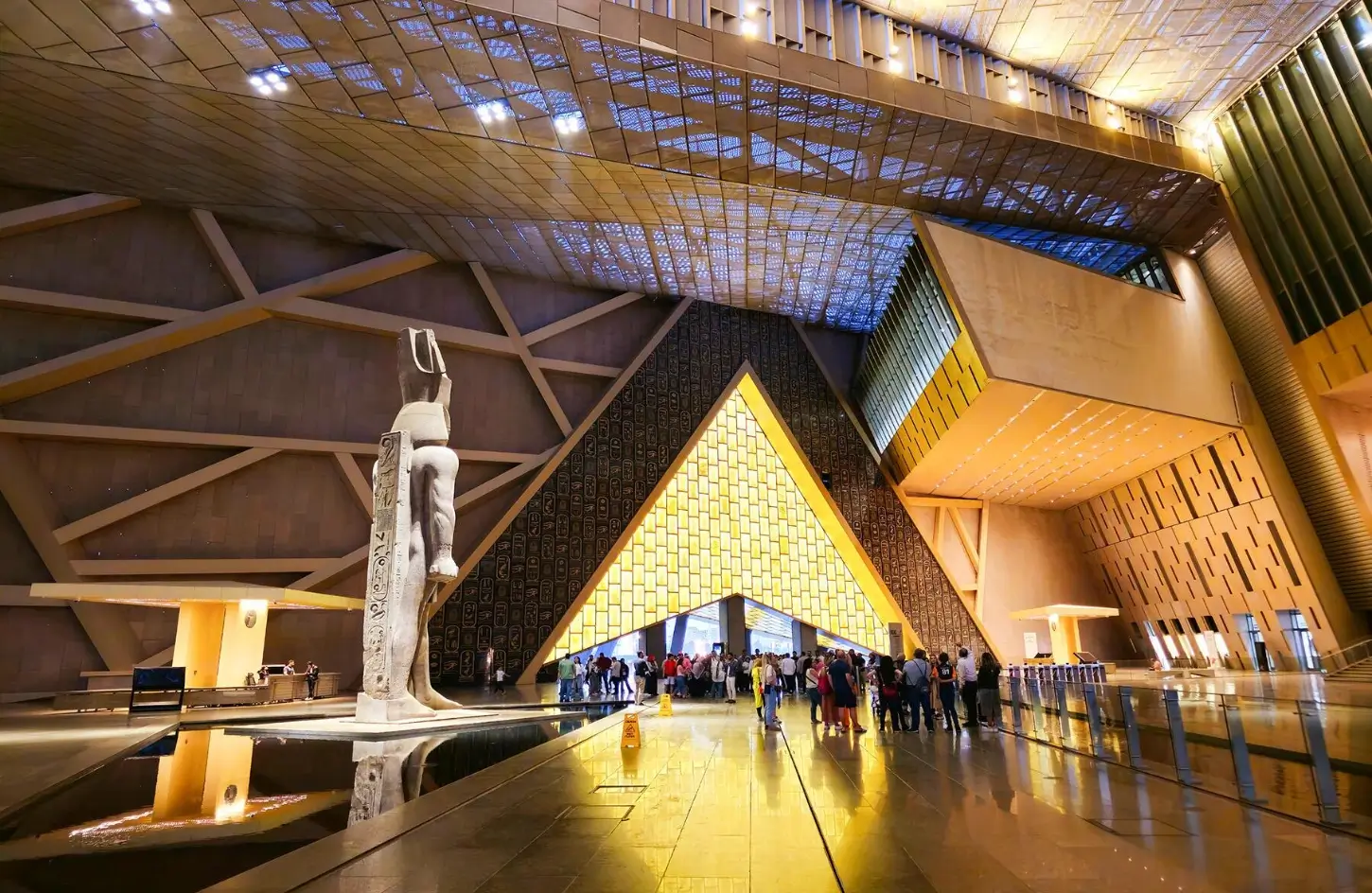
The centerpiece is the Grand Staircase, a soaring run of stone steps lined with statues and stelae that rises through the heart of the building, with the Giza Pyramids visible through the glass wall at the top.
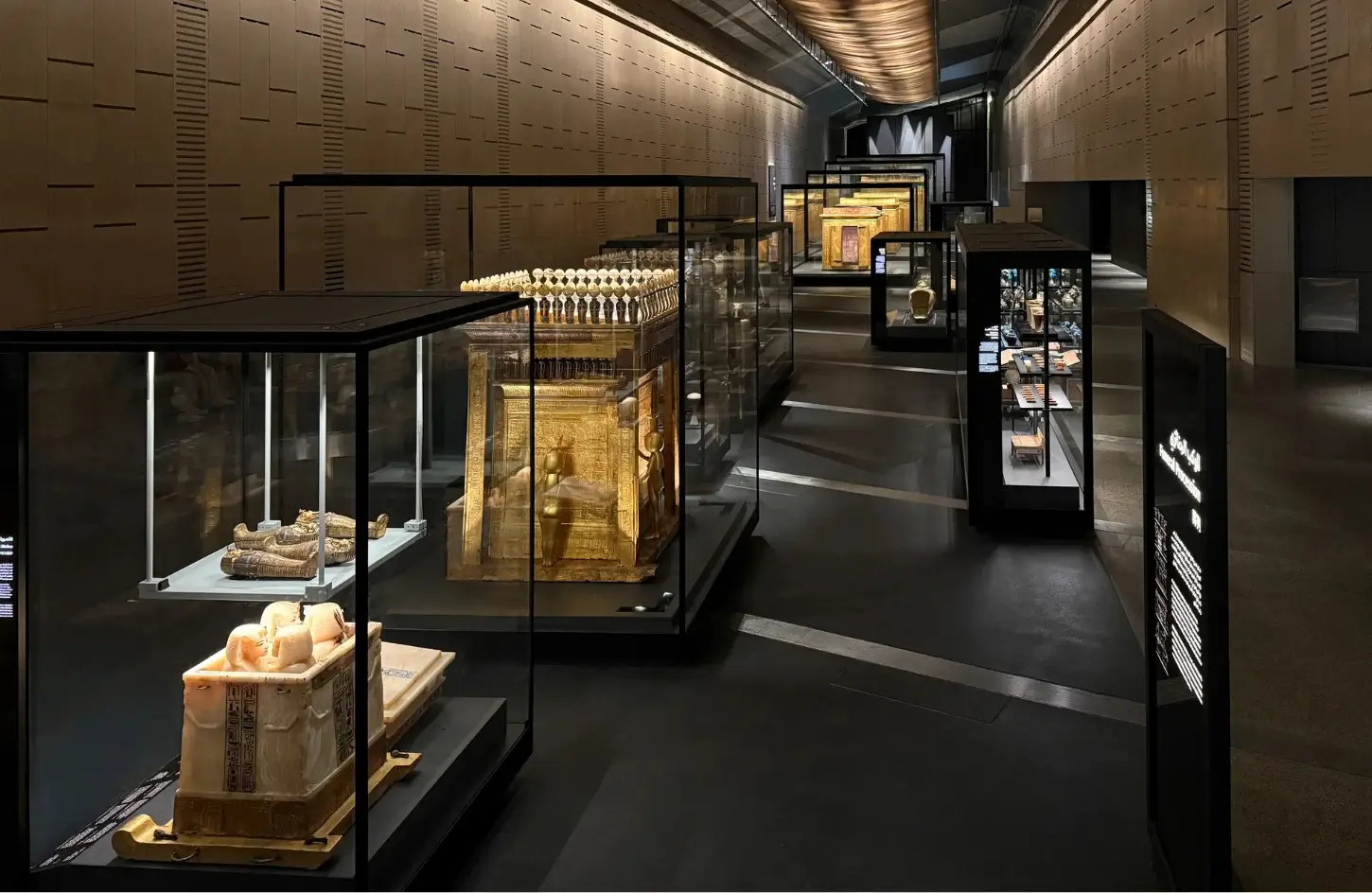
Its most famous holding is the complete Tutankhamun collection, more than 5,000 objects from the boy king’s tomb, displayed together for the first time since their discovery in 1922. Alongside it sits Khufu’s Solar Boat, a 4,600-year-old full-size wooden vessel buried beside the Great Pyramid and reassembled for display.
Grand Egyptian Museum Tickets and Prices
Tickets are sold as a single all-inclusive admission that covers every gallery, including the Tutankhamun collection and the Solar Boat Museum; there is no separate add-on ticket for those sections. As of 2026, the standard foreign-adult ticket runs around 1,450 EGP, roughly $28 to $30, though the exact rate has moved since opening and should be confirmed at the point of booking.
| Ticket type | Price (EGP) | Approx. USD | Notes |
|---|---|---|---|
| Foreign adult | [~1,450] | [~$28–30] | All-inclusive, every gallery |
| Foreign student / child | [~730] | [~$14–15] | Valid ID required |
| Children under 6 | Free | Free | – |
Buy tickets through the official online portal rather than at the gate, since entry is timed and popular slots sell out, especially in the October-to-April high season. A guided tour booked through a licensed operator usually bundles the ticket with skip-the-line entry, transport and an Egyptologist, which removes the booking hassle entirely.
Grand Egyptian Museum Opening Hours and Best Time to Visit
The complex, including the plazas, shops and cafés, generally opens earlier than the galleries themselves. Galleries typically run from around 9:00 AM to 6:00 PM, with extended hours until roughly 9:00 PM on Wednesdays and Saturdays; last entry is usually one hour before closing.
For the best experience, arrive right at opening or choose a late Wednesday or Saturday slot, when the light through the Grand Staircase windows is softer and the crowds are thinner. Winter (October to April) is the busiest season for Egypt generally; see our best time to visit Egypt guide if you are planning the rest of your trip around it.
How to Get There
It sits on the Giza plateau, close to the Great Pyramids and about 30 to 45 minutes from central Cairo depending on traffic. Options include a private driver, a ride-hailing app, or a guided tour that includes transport. Because Cairo traffic is unpredictable, we recommend building in extra time, especially for a morning slot. Our Cairo tours and private Egypt tours include transport there as part of the day.
Must-See Highlights Inside the Grand Egyptian Museum
The Tutankhamun Galleries
This is the reason most visitors come. It is the first place the full Tutankhamun collection, more than 5,000 objects including the golden mask, thrones, chariots and jewelry, has ever been displayed in one place.
The Grand Staircase
A monumental run of statues and stone fragments leading up through the building, ending with a glass wall framing the Pyramids of Giza directly beyond.
Khufu’s Solar Boat
A full-size 4,600-year-old wooden funerary boat, found dismantled beside the Great Pyramid and painstakingly reassembled for display here.
The Colossus of Ramesses II
A towering statue of the pharaoh that greets visitors in the main atrium, one of the most photographed spots on site.
The children’s museum and conservation galleries
Interactive sections and viewable conservation labs let visitors see restoration work in progress, a detail few other museums in the world offer.
How Long Do You Need?
Three hours is the realistic minimum to see the highlights without rushing. A guided half-day visit of 4 to 5 hours is more comfortable and lets you cover the Tutankhamun galleries properly along with the Grand Staircase and Solar Boat. Serious history enthusiasts can easily spend a full day here, since the scale of the collection rewards a slower pace.
Grand Egyptian Museum vs the Egyptian Museum in Tahrir
Travelers often confuse the two. The original Egyptian Museum in Tahrir Square remains open and still holds a significant collection, at a lower ticket price, but GEM has taken over as the primary home for the Tutankhamun treasures and the vast majority of major new discoveries. Most visitors today choose it as their main museum stop in Cairo and treat Tahrir as an optional extra for those with more time.
Pairing the Grand Egyptian Museum With the Pyramids of Giza
Because it sits right beside the Giza plateau, it pairs naturally with a Pyramids visit on the same day. A common, efficient plan is Pyramids and the Sphinx in the morning, lunch nearby, then the museum in the afternoon or on a late Wednesday or Saturday evening slot.
A Brief History and Architecture
Construction began in the early 2000s on a site chosen specifically for its sightline to the Pyramids. The building itself is a feat of engineering: a triangular glass facade echoes the Pyramid silhouette, and the structure was designed to let natural light wash across the stone artifacts inside without damaging them.
Delays, funding shifts and a pandemic pushed the opening back more than once, which only built anticipation. When the doors finally opened to the public in November 2025, after more than two decades of planning and building, it marked the most significant addition to Egypt’s cultural landscape in a generation.
The scale is hard to grasp until you are standing in it. Dozens of galleries spread across multiple levels, connected by that central staircase, with curators organizing objects by era rather than material, so a visitor walking from the Old Kingdom to the New Kingdom experiences something closer to a narrative than a catalogue.
A Sample Half-Day Visit Plan
Guests often ask how to structure their hours once inside, so here is a simple plan that works well for a first-time visit.
- Hour 1: Start at the main atrium with the Colossus of Ramesses II, then climb the Grand Staircase slowly, pausing at the statues and stelae along the way.
- Hour 2: Move into the Old and Middle Kingdom galleries, where smaller, more intimate objects reward a slower pace.
- Hour 3: Head to the Tutankhamun galleries, the collection’s undisputed highlight, and allow extra time here, since it is the busiest section.
- Hour 4: Visit the Solar Boat Museum and the New Kingdom halls before finishing at the gift shop or a café overlooking the plaza.
A licensed Egyptologist guide can reorder this plan around crowd flow and your personal interests, which is one reason most of our guests choose a guided visit over going alone.
Photography and Accessibility
Standard photography without flash is generally permitted throughout most galleries, though tripods and professional equipment may require a separate permit, and a few sensitive display cases restrict photos entirely. Check current camera policy at booking, since it has shifted since opening.
The complex was built with modern accessibility in mind: ramps, elevators and wide walkways connect every level, and wheelchairs are available on request at the entrance. Visitors with mobility needs should mention this when booking a guided tour so the route can be planned accordingly.
Combining Your Visit With the Rest of Egypt
For most travelers, a stop here is one piece of a bigger Egypt itinerary rather than the whole trip. A typical pattern looks like two or three nights in Cairo, covering the Pyramids, Sakkara and this museum, followed by a flight to Luxor and a Nile cruise down to Aswan.
If that sounds like your trip, our Egypt Nile cruises page covers the standard, deluxe, luxury and dahabiya options for the river portion, and our Egypt travel tips from locals guide covers the practical side of the rest of the journey, from tipping to what to pack.
Travelers short on time sometimes try to squeeze everything into Cairo alone, but a few extra days down south is almost always worth the trade-off.
Beyond Tutankhamun: Other Notable Collections
It is easy to let the boy king’s treasures dominate a visit, but dozens of other galleries hold objects just as significant to specialists. The Old Kingdom rooms include statuary from the pyramid-building era, carved with a precision that still surprises first-time visitors.
Middle Kingdom galleries trace the rise of Egypt’s regional power through finely worked jewelry and administrative seals, while the New Kingdom halls display royal statuary, sarcophagi and temple reliefs recovered from sites across Upper and Lower Egypt.
A dedicated textiles section preserves rare surviving fragments of ancient linen and funerary wrappings, materials that almost never survive millennia intact, and a gallery devoted to daily life objects, tools, toys, board games and cosmetics, humanizes a civilization often reduced to kings and gods.
Temporary exhibitions rotate through a dedicated wing as well, often featuring objects on loan from international collections or newly excavated finds not yet assigned to a permanent gallery. Checking the current exhibition schedule before you go can add an extra layer to a visit that already covers thousands of years in a single afternoon.
What Visitors Are Saying
Early reviews since the November 2025 opening have been overwhelmingly positive, with most visitors singling out the scale of the Tutankhamun galleries and the view from the top of the Grand Staircase as the two moments they remember most.
Common feedback points to the size of the complex as both a strength and a challenge: the collection rewards a full afternoon, but visitors who try to rush through in under two hours often leave feeling they missed the best parts. That feedback is part of why we recommend a guided half-day visit over a quick self-guided pass whenever a traveler’s schedule allows it.
Where to Stay Near the Grand Egyptian Museum
A handful of hotels have opened or expanded specifically to serve visitors heading to the new museum, ranging from international five-star chains with pyramid views to smaller boutique guesthouses in nearby Nazlet El-Semman.
Staying close by lets you take an early morning or late evening slot without fighting Cairo traffic twice in one day, which is especially useful if you also want to catch sunrise or sunset at the Pyramids. Most visitors based in central Cairo still find it manageable as a day trip, particularly with a private driver who knows the fastest route at different times of day.
Practical Visitor Tips
- Wear comfortable shoes: the complex is enormous, and you will walk a significant distance between galleries.
- Bring a photo ID: student and child discounts require valid identification.
- Check camera rules: photography is generally allowed, but a separate fee or restriction may apply in certain galleries. Confirm at booking.
- Arrive early for your slot: entry is timed, so arrive 15 to 20 minutes before your booking.
- Use a guide: an Egyptologist guide turns an impressive building into a story you actually remember. For more general advice, see our Egypt travel tips from locals guide.
- Eat on site or nearby: the complex has its own cafés, and several good restaurants sit within walking distance for a longer visit.
Grand Egyptian Museum: FAQs
How much does the Grand Egyptian Museum cost?
The standard foreign-adult ticket is around 1,450 EGP, roughly $28–30, and includes every gallery. Confirm the current price at booking, since it has changed since opening.
What are the opening hours?
Galleries typically run 9:00 AM to 6:00 PM, with extended hours until about 9:00 PM on Wednesdays and Saturdays. Confirm current hours before you go.
Do I need to book tickets in advance?
Yes. Entry is timed and sold online in advance, and popular slots can sell out in high season.
Is the Tutankhamun collection included in the ticket?
Yes, the standard admission is all-inclusive and covers the full Tutankhamun collection, with no separate ticket needed.
How long should I spend there?
Plan for at least 3 hours, and ideally 4 to 5 hours for a guided visit that covers the main highlights without rushing.
How far is it from the Pyramids of Giza?
It sits right on the edge of the Giza plateau, a few minutes from the Pyramids, which makes the two an easy same-day pairing.
Is the Grand Egyptian Museum better than the old Egyptian Museum in Tahrir?
For most visitors, yes. It now holds the complete Tutankhamun collection and the majority of major artifacts, though the Tahrir museum remains open for those with extra time.
What should I wear to visit?
Comfortable walking shoes and light layers. The complex is vast and involves a lot of walking between galleries.
Plan Your Grand Egyptian Museum Visit
The Grand Egyptian Museum has quickly become the single most important stop in Egypt, and it rewards a little planning: book your timed ticket early, allow enough time, and pair it with the Pyramids for one unforgettable day.
At Egypto Tours, we build GEM visits into private and guided itineraries with skip-the-line tickets, a licensed Egyptologist and transport included. Browse our Egypt tour packages or ask us for a tailored quote.